
Solar explained ·
West Hills and Woodland Hills Solar: LADWP Guide
Going solar in West Hills or Woodland Hills? See how LADWP credits solar, what LADBS permits involve and how to size a system from your own bill.
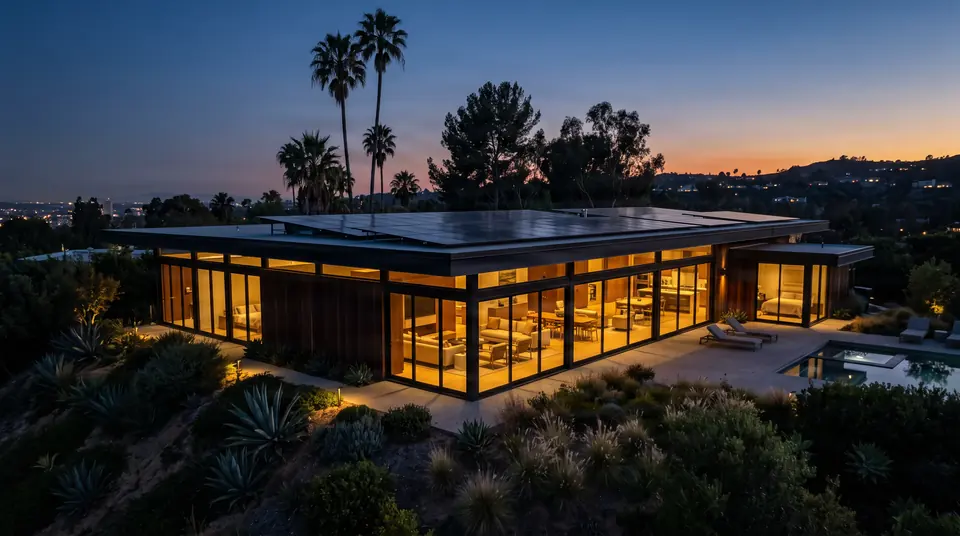
West Hills and Woodland Hills sit in the western San Fernando Valley, and both are part of the City of Los Angeles. That one fact shapes almost everything about going solar there. The city's own building department issues the permit, and many homes buy power from LADWP, the city's own utility. Both have their own published rules, and both are different from what you read about for the rest of California.
This guide walks through what a homeowner in West Hills or Woodland Hills should know, using the official LADWP and LADBS pages we opened and read. Where a detail depends on your exact home, we say so instead of guessing.
Step 1: Confirm your utility
Look at the top of your electric bill. Many homes in the City of Los Angeles are on LADWP, but check yours, because the rules and the numbers change with the utility. California's Net Billing rules from the CPUC cover PG&E, SCE and SDG&E. They do not cover LADWP. If you are an LADWP customer, the net metering guidelines on ladwp.com apply instead. We compare the two in our guide to LADWP vs SCE solar rules.
Step 2: Understand how LADWP credits solar
LADWP's Net Energy Metering guidelines say extra energy your system sends to the grid shows up as a credit on your bill. The credit does not cover taxes or minimum charges. If your service ends while you still hold a credit balance, the guidelines say the balance is set to zero and you are not paid for it. In plain terms: size a system to match what your home uses, not to build a credit you cannot cash out.
The guidelines are written for specific rate schedules, including R-1, A-1, A-2 and A-3, and they urge customers who are not on the R-1A schedule to request a rate analysis from LADWP before they decide. That is good advice. Your rate plan can change how a system pays off, so ask for it.
Interconnection starts with a Work Request Number requested through ladwp.com/nem. LADWP then installs a net meter. After installation, the guidelines describe up to three kinds of inspection: a city permit inspection from LADBS, an LADWP electrical inspection for larger or certain other systems, and an LADWP solar inspection.
Step 3: Know the LADWP program options
LADWP's solar programs page lists several programs. For a homeowner the two that come up most are net metering, where you own your system, and Solar Rooftops, where LADWP owns it.
- Net metering (you own the system). You hire a contractor, the system is yours, and credits appear on your LADWP bill under the guidelines above.
- Solar Rooftops (LADWP owns the system). LADWP inspects the home, designs the system, pulls the LADBS permit, installs a system of 1 to 10 kW and owns it and all of its energy. The homeowner receives annual payments of $360 to $900 for up to 20 years. It is open to owner-occupied homes on certain rate schedules.
These are very different choices. With Solar Rooftops, your own electric bill does not go down because of the panels, because LADWP owns the energy. Read the LADWP page for the full terms. LADWP's solar team lists its contact details on that page.
Step 4: Know what the city permit involves
LADBS, the Los Angeles Department of Building and Safety, publishes a bulletin on solar systems. A few points matter for West Hills and Woodland Hills homes.
- An electrical permit is required for solar PV. For a rooftop system on a one- or two-family home that is 10 kW or smaller and meets the bulletin's conditions, the permit can be issued online.
- A building permit is required for the structural support unless the roof system meets the bulletin's exemptions. Among them: one roofing layer, a sound roof, modules no more than 10 inches above the roof, and an array that covers no more than half of the roof.
- Meeting the building exemption does not waive the electrical permit.
- Roof access and fire safety follow Los Angeles Fire Department requirements. The bulletin also says fire classification must be Class A where Class A roofing is required, for example in Very High Fire Hazard Severity Zones. Parts of the western Valley foothills can fall in such zones, so ask your contractor to check your address.
- If you want a ground-mounted system on a sloped lot, the bulletin says a grading pre-inspection is needed in the Grading Hillside Area. LADBS points owners to its ZIMAS tool to look up a property.
- LADBS does not send you to LADWP. The installer has to get the LADWP approvals separately.
Step 5: Check your home for special cases
The LADBS bulletin lists a few situations that add steps: historic buildings (the owner signs an advisory notice), hillside lots, and zones with special rules such as specific plans. You can look up your property on the city's ZIMAS website. If your street has an overlay, tell your contractor early so the permit does not stall.
What this means for a homeowner
- Your first question is your utility, and your second is your rate plan.
- Do not size a system for credits you cannot cash out. Under LADWP's guidelines, a leftover balance at the end of service is zeroed.
- A battery question is a rate question first. We did not find an LADWP page that says how a battery changes the credit, so ask for the numbers in writing before you add one.
- The permit is mostly your contractor's work. You should not have to stand in a line at a city counter.
We have not put a dollar savings figure on this page. A figure depends on your usage and your plan, and the honest way to get it is from your own bill.
The Ray4Ever promise
We keep this simple. No visit to your house. No hours of talking. No pile of questions left behind. You send us your electric bill, every page, and we send you the final numbers: system size, cost, and what your bill looks like after. Then you decide if solar works for you. If the numbers say it does not, we will tell you that too.
You can see how it works, read the FAQ, or skip straight to it: send your bill and get your final numbers.
Questions homeowners ask
Are West Hills and Woodland Hills homes on LADWP?
Both neighborhoods are part of the City of Los Angeles, and many homes in the city buy power from LADWP. Your bill names your utility, and we confirm it when you send your bill.
What happens to extra solar credits at LADWP?
LADWP's net metering guidelines say excess energy credits roll onto your bill, except for taxes and minimum charges. If service ends with a balance left, it is zeroed with no payment.
Who issues solar permits in West Hills and Woodland Hills?
The Los Angeles Department of Building and Safety. It requires an electrical permit for solar and a building permit for the structure unless the roof system meets its exemptions.
What is LADWP Solar Rooftops?
A program where LADWP designs, installs and owns a 1 to 10 kW system on your roof and pays you a fixed amount each year for up to 20 years. LADWP owns the energy, so read its page for full terms.
Want your own numbers?
Send us your last electric bill. No visit, no hours of talking, no pressure. We send you the final numbers and you decide if solar works for you.
More from the blog
Solar explained ·
Calabasas Solar Guide: SCE Net Billing, Permits
Going solar in Calabasas? Learn how SCE Net Billing credits solar, why batteries matter, and how the city's SolarAPP+ permit route works for homeowners.
Solar explained ·
Solar Permits: LA, Calabasas, Simi Valley Guide
Compare solar permit routes in Los Angeles, Calabasas, Thousand Oaks and Simi Valley, from LADBS electrical permits to SolarAPP+ online review.
Solar explained ·
LADWP vs SCE Solar Rules: A Homeowner Guide
LADWP and SCE follow different solar rules in LA. See how each credits extra power, what the CPUC covers and what to check on your bill before you quote.