
Solar explained ·
LADWP vs SCE Solar Rules: A Homeowner Guide
LADWP and SCE follow different solar rules in LA. See how each credits extra power, what the CPUC covers and what to check on your bill before you quote.
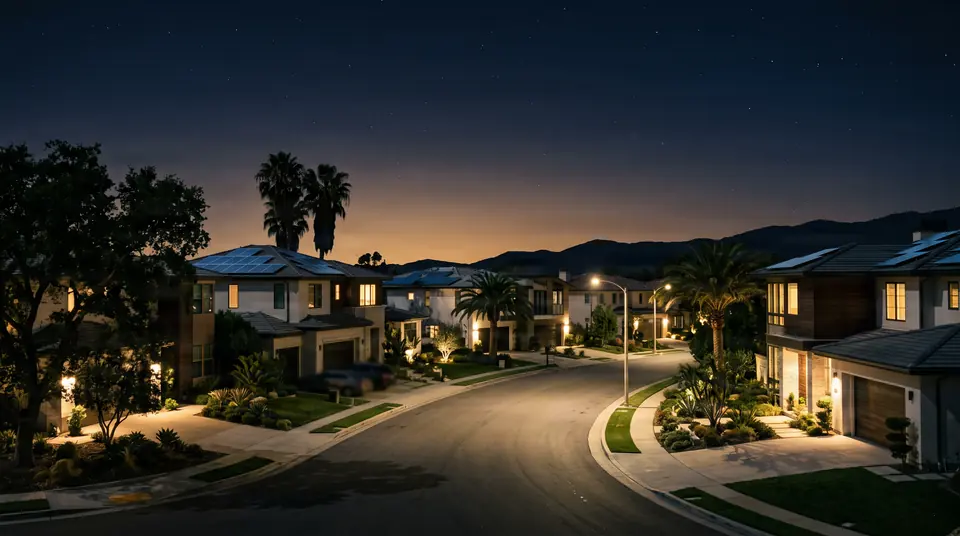
Two homes in Los Angeles can sit a few miles apart, have the same roof and the same family, and still follow completely different solar rules. The reason is the name at the top of the electric bill. Homes in much of the City of Los Angeles buy power from LADWP, the city's own utility. Homes in nearby cities such as Calabasas, Thousand Oaks and Simi Valley buy power from Southern California Edison, or SCE. The two utilities do not run solar the same way.
This guide lays out what we could confirm from the official pages of the California Public Utilities Commission (CPUC) and LADWP, in plain English. Where we could not confirm something, we say so.
Why one state, two rule books
California's big solar billing rules come from the CPUC. The CPUC's own page on Net Energy Metering and Net Billing says those rules cover the three investor-owned utilities: PG&E, SCE and SDG&E. LADWP is not on that list. It is a city-owned utility, so it writes its own solar guidelines.
That one fact explains most of the confusion homeowners have. A video, an article or a neighbor may describe "California net billing" and be exactly right for an SCE customer and not apply at all to an LADWP customer, or the other way around. Before you compare any quote, find out which utility is yours.
The quick comparison
| Question | SCE (CPUC rules) | LADWP |
|---|---|---|
| Who writes the solar rules | The CPUC | LADWP, in its own guidelines |
| Rule name for new solar customers | Net Billing Tariff, which SCE calls the Solar Billing Plan, for customers who applied on or after April 15, 2023 | LADWP's Net Energy Metering (NEM) guidelines, plus its own solar programs |
| How extra power is credited | Exported power earns credits that reflect its value to the grid, which is usually lower than the retail rate | Excess energy credits roll onto your bill, except for taxes and minimum charges |
| Required rate plan | The CPUC lists a time-of-use rate for electrification customers; for SCE it is TOU-D-PRIME | Eligible rate schedules named in LADWP's guidelines include R-1, A-1, A-2 and A-3 |
| Where to read the rules | cpuc.ca.gov | ladwp.com/nem and the LADWP solar programs page |
The table is a summary. Every row comes from the CPUC's net billing page or from LADWP's own guidelines, which we opened and read before writing this post.
How SCE customers are credited
The CPUC explains the Net Billing Tariff in a few steps. Your solar system first covers what your home is using at that moment. Whatever it makes beyond that goes out to the grid, and you earn credits for it. Those credits reflect the value of that power to the grid. The CPUC says that value is usually lower than the retail rate, though at some times, such as late summer evenings, it can be higher.
Two more points from the CPUC page matter for your wallet:
- Customers on the Net Billing Tariff pay their bill monthly, and extra credits roll over until the yearly true-up.
- The CPUC says customer-generators can maximize their bill savings by pairing solar with battery storage. It also reports that about 70% of Net Billing customers had paired a battery by the end of 2024.
The CPUC page also says residential PG&E and SCE customers who interconnect before the end of 2027 get an extra export payment, called an adder, for nine years. That detail changes the math for the next few years, so read the CPUC page for the exact conditions.
How LADWP customers are treated
LADWP's Net Energy Metering guidelines describe a different setup. Under those guidelines, extra energy your system sends to the grid shows up as a credit on your bill. The credit does not cover taxes or minimum charges. If you end service with a credit balance left over, the guidelines say that balance is zeroed and you are not paid for it.
The same guidelines name the rate schedules the program is written for, and they tell customers who are not on the R-1A schedule to ask LADWP for a rate analysis. That is a fair step to take before you sign anything. LADWP lists the rate analysis contact in the guidelines.
LADWP also runs other solar programs. Its solar programs page lists Feed-in Tariff programs, Virtual Net Metering, Solar Rooftops, Shared Solar, the Self-Generation Incentive Program and Utility Built Solar. One of them, Solar Rooftops, is very different from buying a system: LADWP designs, installs, owns and maintains a system on your roof and pays you a fixed yearly amount. LADWP's Solar Rooftops page says it is open to owner-occupied homes on certain rate schedules and that it installs systems from 1 to 10 kW. It lists payments of $360 to $900 a year for up to 20 years. Read that page for the full terms before you decide, because under that program LADWP owns the system and all of its energy.
Leases and ownership under LADWP rules
If you are thinking about leasing, LADWP's guidelines have specific conditions. A lease must run at least 10 years, include an option to buy, not base payments on how much the system produces, and come with LADWP's Solar Lease Compliance Form. Ask any company offering you a lease to show how its offer meets each condition.
Permits are separate from the utility
The utility decides how you are credited. The city or county decides whether you can build. In the City of Los Angeles, building permits come from the Los Angeles Department of Building and Safety, known as LADBS. LADBS states in its own bulletin that it does not send applicants to LADWP, so the installer has to get every LADWP approval separately. In SCE cities, the city sets its own permit process. We cover those in our area pages for Calabasas, Thousand Oaks and Simi Valley.
When you go ahead with Ray4Ever, the licensed solar contractor handles both the city permit and your utility's approval for you at no extra charge.
What to check on your own bill
- Look at the top of the bill for the utility name. LADWP and SCE look different.
- Find your rate plan name. Both utilities have several plans, and the plan changes the savings math.
- Gather every page of the bill, not just the first one. The back pages hold the usage detail that shows when you use power.
- If you are on SCE and use a lot of power in the evening, ask how a battery changes the numbers, because the CPUC says batteries help bill savings under net billing.
- If you are on LADWP, ask for the rate analysis the guidelines mention before you commit to a system size.
What we could not confirm
We have not published a dollar figure for how much more or less you save with one utility than the other, because it depends on your usage, your rate plan and the year you apply. We also did not find a single page that compares the two utilities side by side, so the table above is our own summary of two separate official sources. If a number matters to your decision, check it on the official page linked below.
The Ray4Ever promise
We keep this simple. No visit to your house. No hours of talking. No pile of questions left behind. You send us your electric bill, every page, and we send you the final numbers: system size, cost, and what your bill looks like after. Then you decide if solar works for you. If the numbers say it does not, we will tell you that too.
You can see how it works, read the FAQ, or skip straight to it: send your bill and get your final numbers.
Questions homeowners ask
Does California net billing apply to LADWP customers?
No. The CPUC's net billing rules cover PG&E, SCE and SDG&E. LADWP is a city utility and follows its own solar guidelines. Your bill shows which utility you have.
What happens to extra solar credits under LADWP's guidelines?
LADWP's Net Energy Metering guidelines say excess energy credits roll onto your bill, except for taxes and minimum charges. If service ends with a balance left, the guidelines say it is zeroed with no payment.
Are SCE customers paid the full retail rate for exported solar power?
Not usually. The CPUC says Net Billing credits reflect the grid value of exported power, which is typically lower than the retail rate, though it can be higher at some times such as late summer evenings.
Who gets the permit and utility approval if I go solar with Ray4Ever?
The licensed solar contractor applies for your city permit and your utility's approval for you, at no extra charge when you go ahead.
Want your own numbers?
Send us your last electric bill. No visit, no hours of talking, no pressure. We send you the final numbers and you decide if solar works for you.
More from the blog

Solar explained ·
Calabasas Solar Guide: SCE Net Billing, Permits
Going solar in Calabasas? Learn how SCE Net Billing credits solar, why batteries matter, and how the city's SolarAPP+ permit route works for homeowners.
Solar explained ·
West Hills and Woodland Hills Solar: LADWP Guide
Going solar in West Hills or Woodland Hills? See how LADWP credits solar, what LADBS permits involve and how to size a system from your own bill.
Solar explained ·
Solar Permits: LA, Calabasas, Simi Valley Guide
Compare solar permit routes in Los Angeles, Calabasas, Thousand Oaks and Simi Valley, from LADBS electrical permits to SolarAPP+ online review.