
Solar news ·
Solar Plus Battery: Why Evenings Matter in LA
Australian grid data shows a battery changes who you buy evening power from. See how California's solar billing rules decide if it pays off for LA homes.
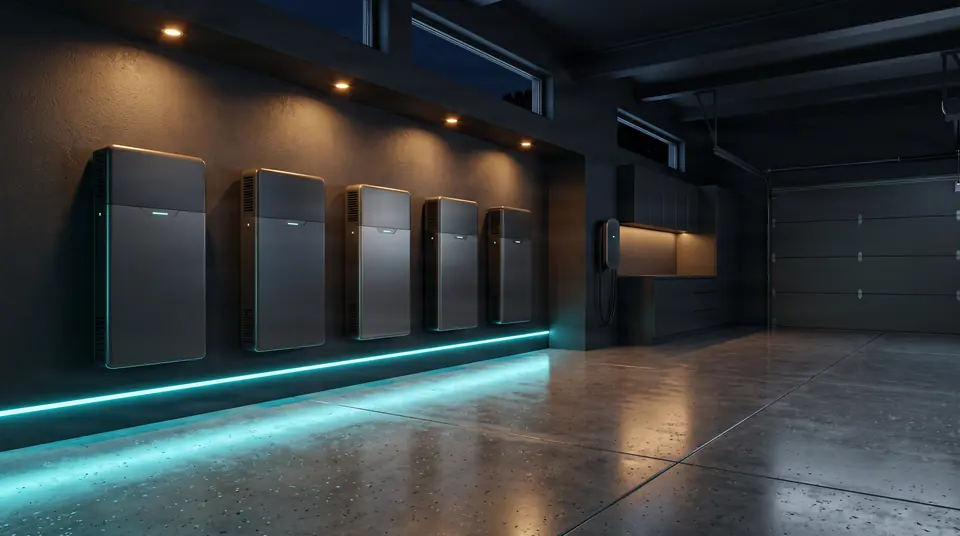
Two reports landed within weeks of each other, and together they say something useful for anyone in Los Angeles looking at solar this winter. On November 24, 2026, the Institute for Energy Economics and Financial Analysis (IEEFA) published a roundup of how cheap solar and cheaper batteries are changing power markets around the world. One of its key numbers comes from Australia's grid operator, AEMO: in a sample of homes, households with rooftop solar and a battery drew around three-quarters less electricity from the grid during the evening peak than households with solar alone.
That is an Australian number, not a California one, and we will not pretend otherwise. But the reason behind it is the same reason batteries matter so much on a Southern California bill today. This post walks through what the reports actually say, what California's own regulator says, and how to tell whether any of it applies to your house.
What the new reports say, in numbers
AEMO's Quarterly Energy Dynamics report covers July through September 2026 on Australia's main east coast grid. We read the operator's own release to check the figures IEEFA quoted. They match.
| Finding | Number | Source |
|---|---|---|
| Evening grid use, solar + battery homes vs. solar-only homes | About three-quarters (75%) less, from sample data | AEMO |
| Share of evening peak power (4 pm to 9 pm) from grid-scale batteries | 8%, ahead of gas at 5.1% for the first time | AEMO |
| Gas-fired generation | Down 34%, lowest third quarter since 2000 | AEMO |
| Renewable share of generation | 44.3%, a third-quarter record | AEMO |
| Average wholesale power price | Down 27% from a year earlier | AEMO |
| Installed cost of utility-scale battery storage | Down 95% since 2010 | IEEFA |
| Australian homes with solar panels | About 40% | IEEFA |
| Puerto Rico rooftop systems that include a battery | About 83% | IEEFA |
AEMO also said batteries set the wholesale price in almost half of all dispatch intervals, up from 18% a year earlier, and that this helped pull evening peak prices down. In plain words: the most expensive hours of the day got cheaper because stored solar power showed up to compete.
IEEFA adds two points worth knowing. First, its modelling in Australia found that rooftop solar and batteries combined with efficient electric appliances and other home upgrades could cut a typical household's energy bills by 80% to 90%, depending on location and which upgrades are made. That is a modelled result for Australian homes with a full set of upgrades, not a promise for any one house. Second, in the United States, IEEFA found new combined-cycle gas plant proposals now cost at least $2,500 per kilowatt of capacity, roughly triple what projects cost in the early 2020s. Gas power is getting more expensive to build while solar and storage get cheaper.
Why the evening is the whole story
Solar panels make the most power around midday. Most homes use the most power after sunset: cooking, air conditioning, laundry, lights, TV, maybe an electric car plugged in. Without a battery, a solar home sells its midday extra to the grid and then buys power back in the evening.
A battery changes the order. It fills up from the roof during the day and runs the house after dark. That is exactly what the Australian sample shows: same sun, same panels, but about 75% less power bought from the grid in the evening hours.
How much money that saves depends on two things:
- What your utility pays you for power you send out. If it pays the full retail price, a battery adds less. If it pays much less, a battery adds a lot.
- What your utility charges you in the evening. On a time-of-use plan, evening power is the most expensive power of the day.
What this means for a Los Angeles homeowner
Greater Los Angeles is split between utilities, and the rules are not the same. Which one sends your bill decides how much a battery is worth to you.
If your bill comes from Southern California Edison
The California Public Utilities Commission (CPUC) sets the solar rules for Edison, PG&E and SDG&E. According to the CPUC, every customer who applied to connect solar on or after April 15, 2023 is on the Net Billing Tariff, which the utilities call the Solar Billing Plan. Here is what the CPUC's own page says about it:
- Solar power you use in your own home still offsets your energy cost directly.
- Power you export is credited at a value based on the CPUC's Avoided Cost Calculator. The CPUC says this is usually lower than the retail rate, but it can rise above the retail rate on late summer evenings.
- The CPUC states that customers can maximize bill savings by installing battery storage with their solar, so they can use or export stored energy during those high-value hours.
- Nearly 70% of Net Billing customers had paired a battery with their solar by the end of 2024.
- Customers must be on a specific time-of-use rate. For Edison that rate is TOU-D-PRIME.
- Residential Edison customers who apply before the end of 2027 receive slightly higher export credits for nine years. Homes that are required to add solar, such as new construction under the building code, do not get that adder.
- The original customer is guaranteed the tariff for nine years.
- Bills are paid monthly, and extra credits roll over until an annual true-up.
- A system can be sized to your annual electric use, plus up to 50% more if you attest that you will need it (for example, for a future electric car).
Put those together and the Australian finding lines up with California's rules. When exported midday power earns a low credit and evening power costs the most, the smart move is to keep your own solar power and use it at night. A battery is the tool that does that.
If your bill comes from LADWP or another city utility
The CPUC notes that its Net Billing page applies only to the three large investor-owned utilities. The Los Angeles Department of Water and Power, and city utilities such as Burbank, Glendale and Pasadena, set their own solar rules. The math can be quite different, and a battery may matter more for backup power than for the bill. We do not guess at this. Your bill tells us which utility and which rate plan you are on, and we run the numbers for those exact rules.
5 things to check before you add a battery
- Your utility and rate plan. It is printed on the bill. This single line changes the answer more than anything else.
- When you use power. A home that is empty all day and busy from 4 pm to 9 pm gets the most from a battery. A home with someone in it all day uses more solar power directly.
- Your yearly kilowatt-hours. All twelve months matter, because summer air conditioning and winter use are very different in Los Angeles. This is why we ask for every page of the bill.
- Future loads. An electric car, a heat pump or an induction stove raises your use. Under the Net Billing Tariff you can size for that if you attest to the need.
- Backup needs. If outages worry you, a battery has a value that does not show on the bill at all.
What these reports do not tell you
It is worth being straight about the limits.
- The 75% figure comes from sample data on Australian households during the evening peak. It is not a measurement of California homes, and it is not a bill savings percentage.
- The 95% drop in battery cost is for utility-scale storage since 2010. It does not mean a home battery costs 95% less than it did a few years ago.
- Wholesale prices falling 27% in Australia does not mean retail rates in Los Angeles will fall.
- A battery adds to the total cost. For some homes the extra savings cover it, and for some they do not. Only your own numbers can answer that.
What the reports do show is a clear direction: more of solar's value now sits in the evening, and storage is how a home captures it. California's regulator says the same thing in its own words.
The Ray4Ever promise
We keep this simple. No visit to your house. No hours of talking. No pile of questions left behind. You send us your electric bill, every page, and we send you the final numbers: system size, with and without a battery, cost, and what your bill looks like after. Then you decide if solar works for you. If the numbers say a battery does not pay off for your home, we will tell you that too.
You can see how it works, read the FAQ, or skip straight to it: send your bill and get your final numbers.
Questions homeowners ask
Do batteries cut evening grid use for Los Angeles homes?
Australia's grid operator, AEMO, published sample data for July to September 2026 showing that homes with rooftop solar and a battery drew around three-quarters less grid electricity during the evening peak than homes with solar alone. It is not a California measurement and it is not a bill savings percentage, but it shows how much evening power a battery can cover.
Why do batteries matter more in California now?
The CPUC says customers of Edison, PG&E and SDG&E who applied for solar on or after April 15, 2023 are on the Net Billing Tariff. Exported power is usually credited below the retail rate, while evening power costs the most. The CPUC states that pairing a battery with solar lets customers maximize bill savings.
Do the same rules apply to LADWP customers?
No. The CPUC's Net Billing rules cover the three large investor-owned utilities. LADWP and other city utilities set their own solar rules, so the battery math is different. Your bill shows which utility and rate plan you have.
How do I find out if a battery pays off for my home?
Send Ray4Ever every page of your electric bill. We size the system with and without a battery for your utility and rate plan and send you the final numbers. No home visit and no long sales call.
Want your own numbers?
Send us your last electric bill. No visit, no hours of talking, no pressure. We send you the final numbers and you decide if solar works for you.
More from the blog

Solar explained ·
Calabasas Solar Guide: SCE Net Billing, Permits
Going solar in Calabasas? Learn how SCE Net Billing credits solar, why batteries matter, and how the city's SolarAPP+ permit route works for homeowners.
Solar explained ·
West Hills and Woodland Hills Solar: LADWP Guide
Going solar in West Hills or Woodland Hills? See how LADWP credits solar, what LADBS permits involve and how to size a system from your own bill.
Solar explained ·
Solar Permits: LA, Calabasas, Simi Valley Guide
Compare solar permit routes in Los Angeles, Calabasas, Thousand Oaks and Simi Valley, from LADBS electrical permits to SolarAPP+ online review.